8-8-16 The Warm-Up To Keep Coming Back To
I have an hour to practice. Sticks in hand, I already know the first thing I will play.
Most of us have a few warm-ups we return to for years. Legatos or 8-on-a-hand are the standard go-to. The version I use most often is 8-8-16.
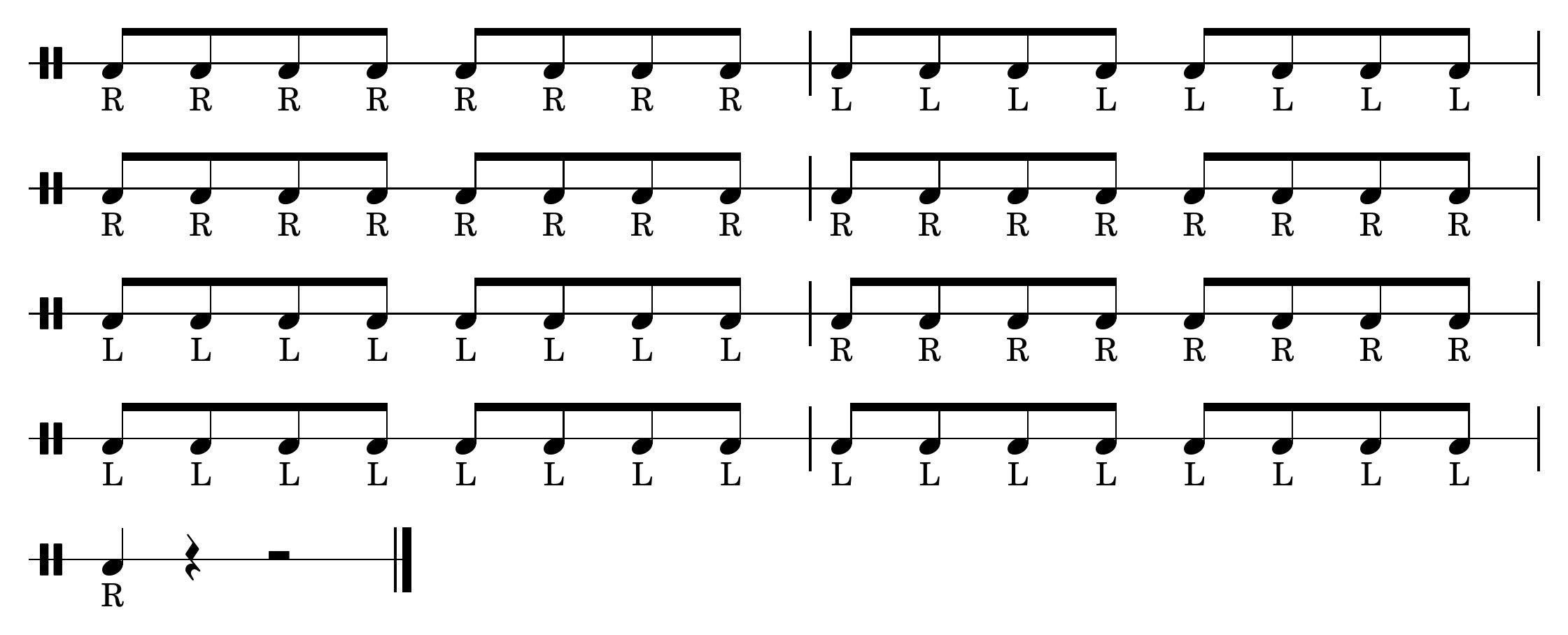
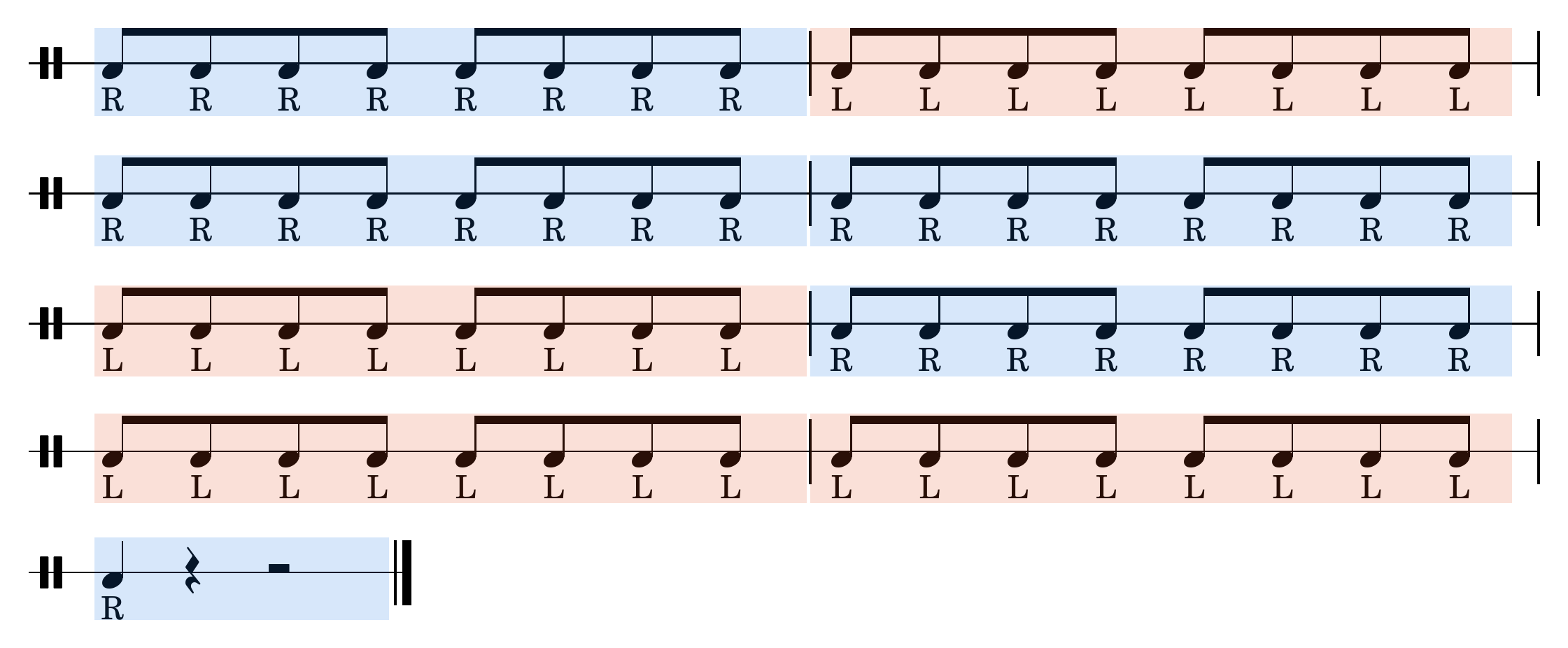
It is an eight-bar phrase: 8 right, 8 left, 16 right, 8 left, 8 right, 16 left, and a single right-hand release. It feels like a complete musical statement rather than a short technical drill. You can play along with many songs without constant counting or resetting. The simplicity leaves attention free for the details that actually improve the playing. Here it is highlighted by hand for easier at-a-glance.
What to Focus On While Playing
Because the pattern itself is straightforward, the exercise functions as a reliable vehicle for focused work. Our minds can easily understand the sequence, which leaves attention available for the finer details of execution.
Grip This exercise is a good place to look closely at the finer details of the grip. How consistent is your hand shape from the first note to the last of each hand? How is pressure distributed inside the hand? How much arm, wrist, or finger are you using at different dynamics/heights and tempi?
Rebound The reason some people call this exercise “Legatos” is that the strokes are meant to be the textbook definition of the word: smooth and connected. There are more details to consider here. How much force are we putting into the drum? Are we allowing the bead to rebound on its own? Are we too tense or pushing the stick to forcefully? Is it returning to the same height every time? Is the stick moving straight to the drum, or is it taking an unnatural slicing path?
Tacet hand The hand you are not playing with matters too. Is it staying in a professional-looking position, or is it floating off into another stratosphere? When we finish playing with one hand, are we stopping the stick and keeping it still?
Timing The exercise has essentially no rhythmic variance. We aren’t focusing on playing a rhythm so much as locking ourselves into time — quantizing to the metronome or the song. When I am teaching a student a song, a minimum requirement is that they can play 8-8-16 with that song. It is the ground-level prerequisite for playing music at a given tempo. The goal is to bury the metronome with your own sound. When the click disappears underneath you, the time is actually solid.
Sound Separate from when the notes land is the quality of the notes themselves. The aim is uniformity: right hand to left hand, first note to last note of every measure — same height, velocity, beating spot, and volume. The exercise becomes a kind of target practice for the sound you make. If I have to sum up our goals to one word, it is CONSISTENCY!
Going Deeper
Once the basic form is comfortable, it can be useful to step back and look at the larger architecture.
Viewed from a slightly higher level, the sticking is a meta-paradiddle:
R – L – R – R – L – R – L – L
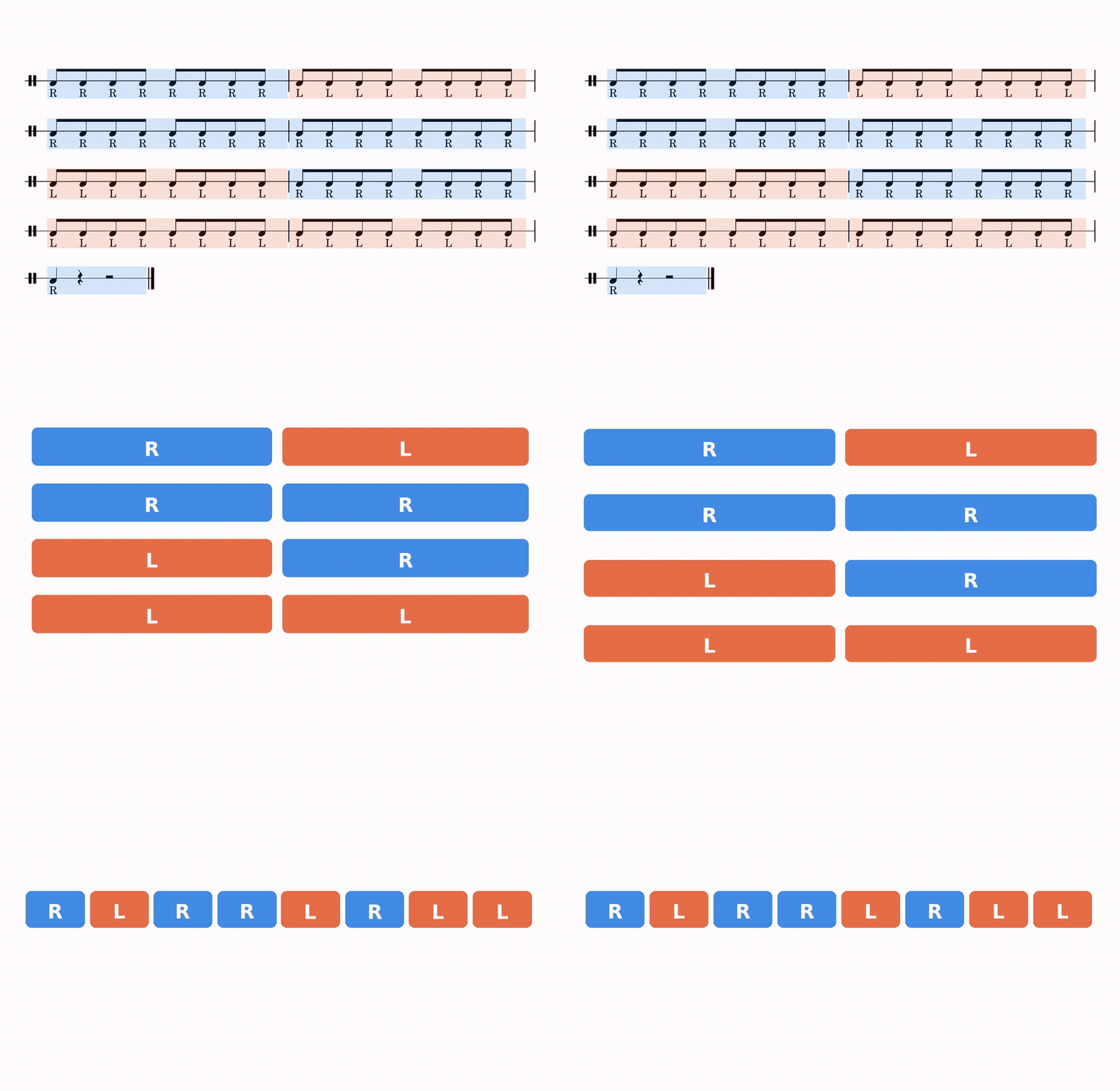
It is a cool thing to witness a student’s first “light switch” moment on the concept of form. Seeing the exercise this way can provide us with a more wholistic concept of phrasing we can apply elsewhere. This format is incredibly useful for creating exercises for other skill-sets as well. I frequently use this form to generate exercises for challenging passages of music.
Mostly just a detail of analysis, but a helpful way for us to conceptualize at a higher level. The pattern stops registering as a string of separate blocks and starts to feel like a single, balanced idea.
Now let’s take a look at useful variations for 8-8-16
Volume Variations
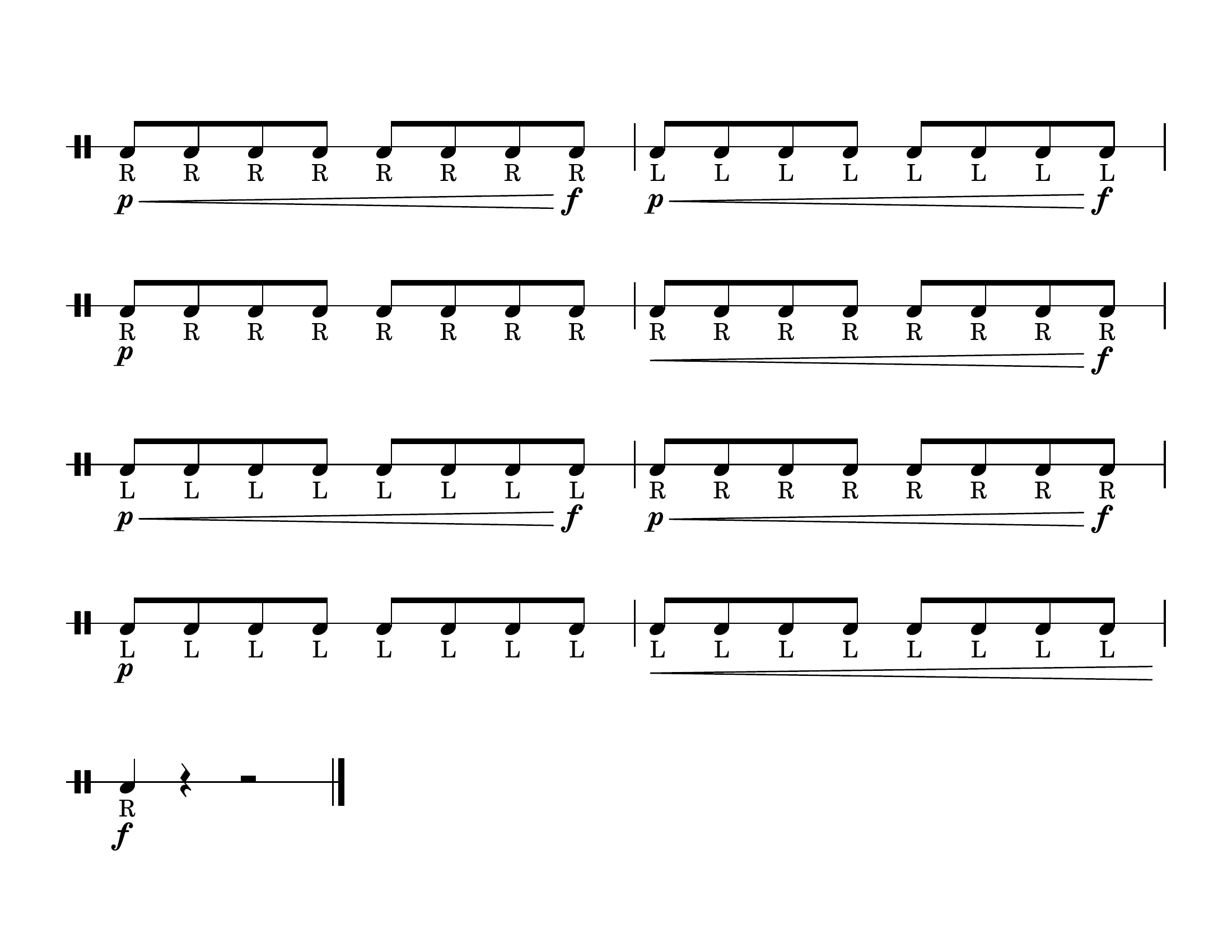
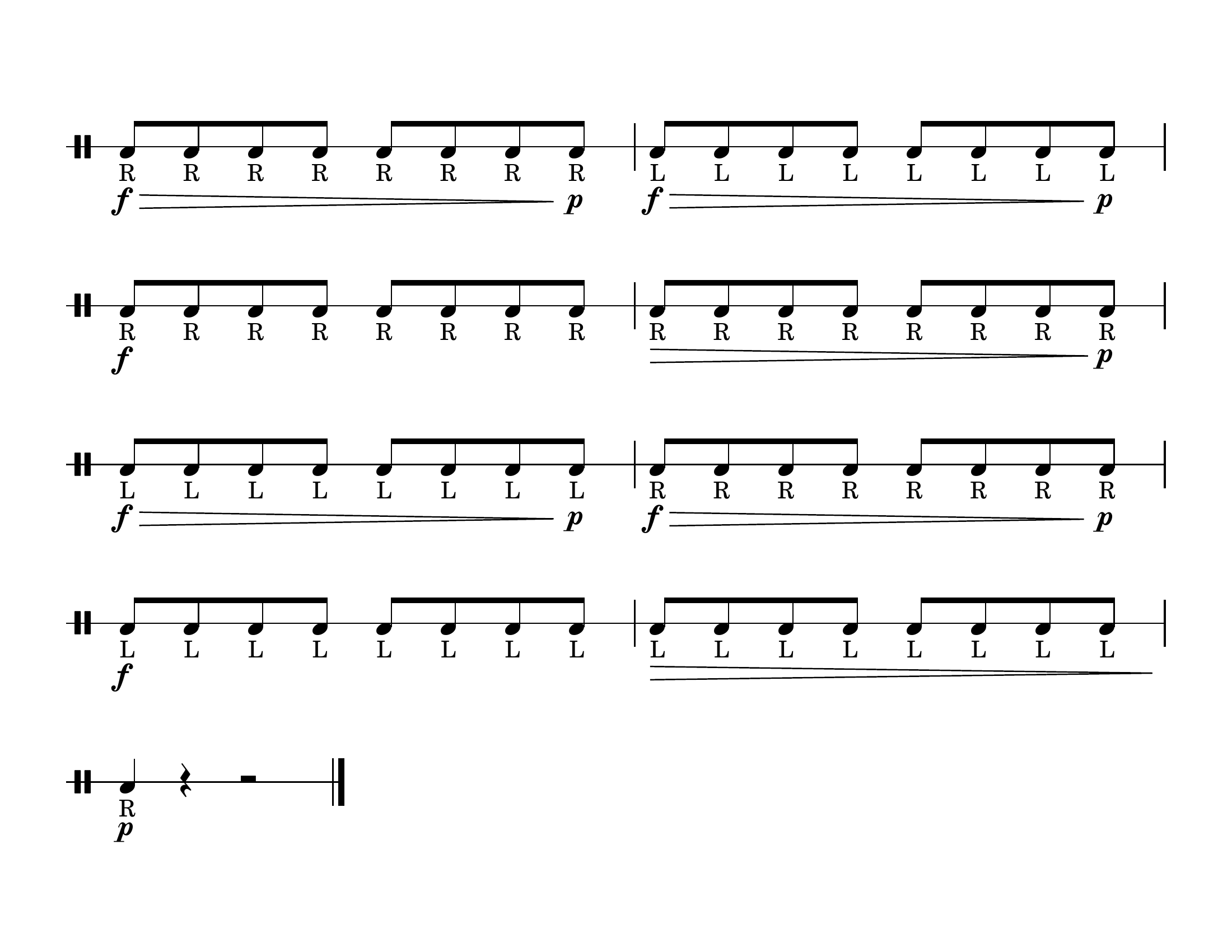
The same form is a clean vehicle for dynamic control. Because the notes themselves stay constant, any change in volume or shape is immediately audible.
Every common dynamic: pianissimo, piano, mezzo-piano, mezzo-forte, forte, fortissimo
Crescendo
Decrescendo
Accent Variations
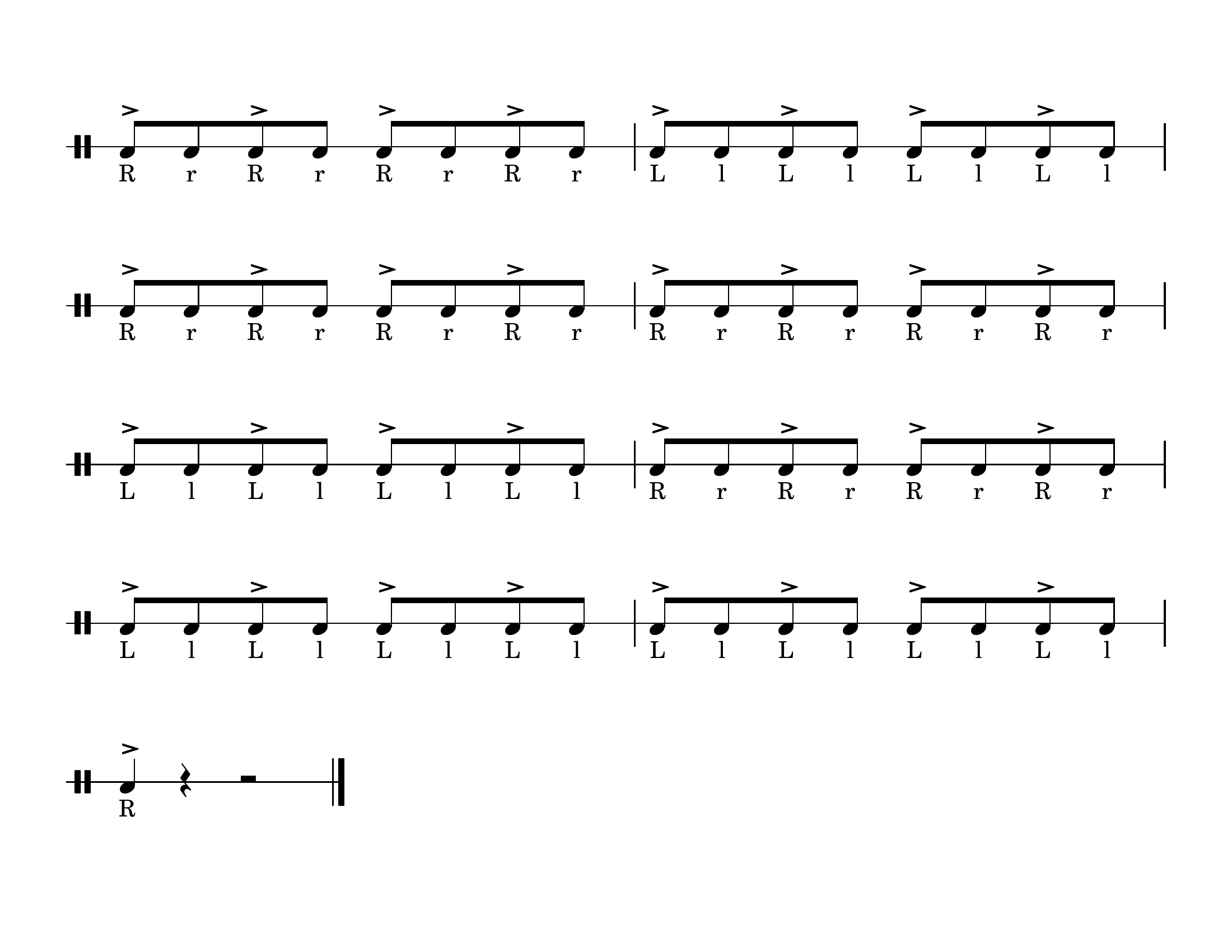
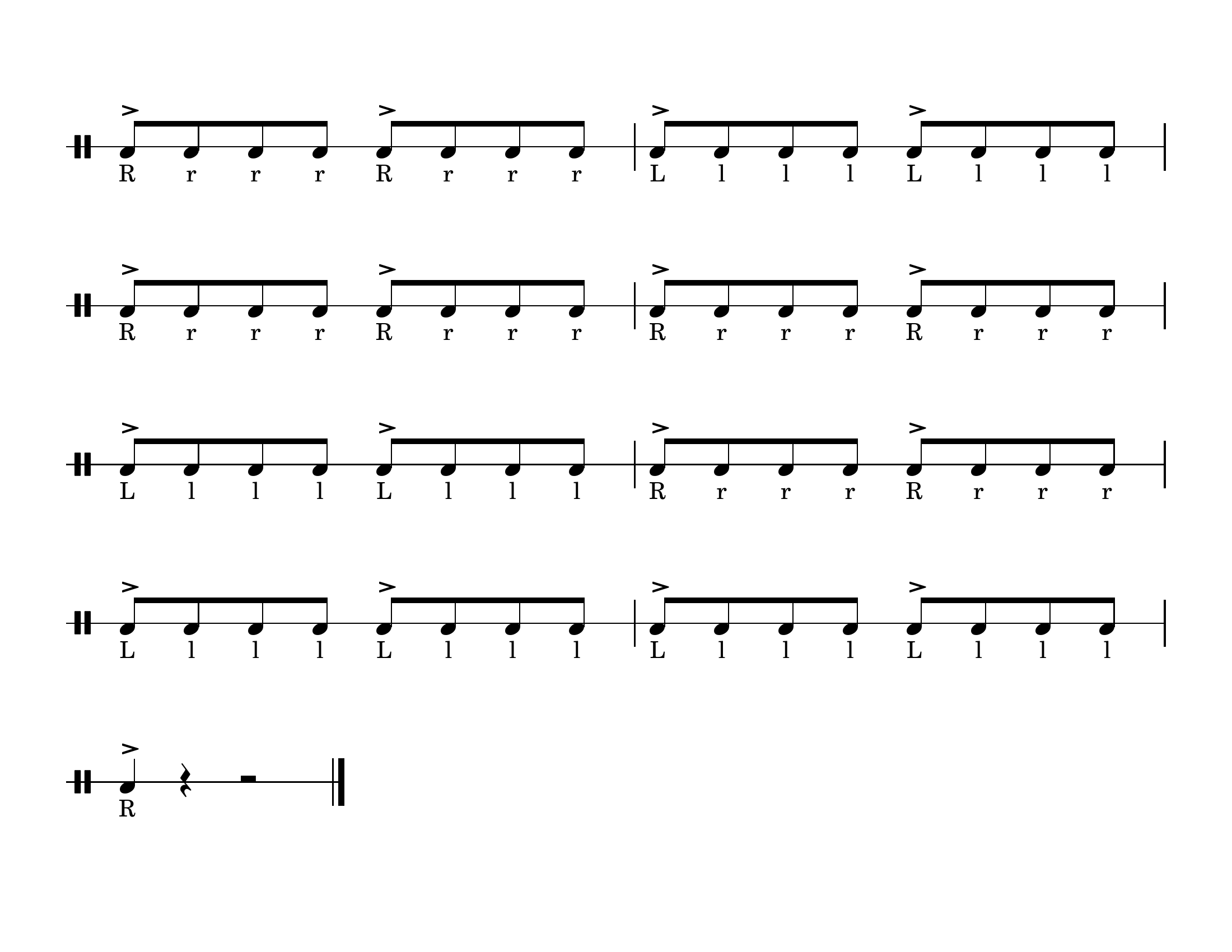
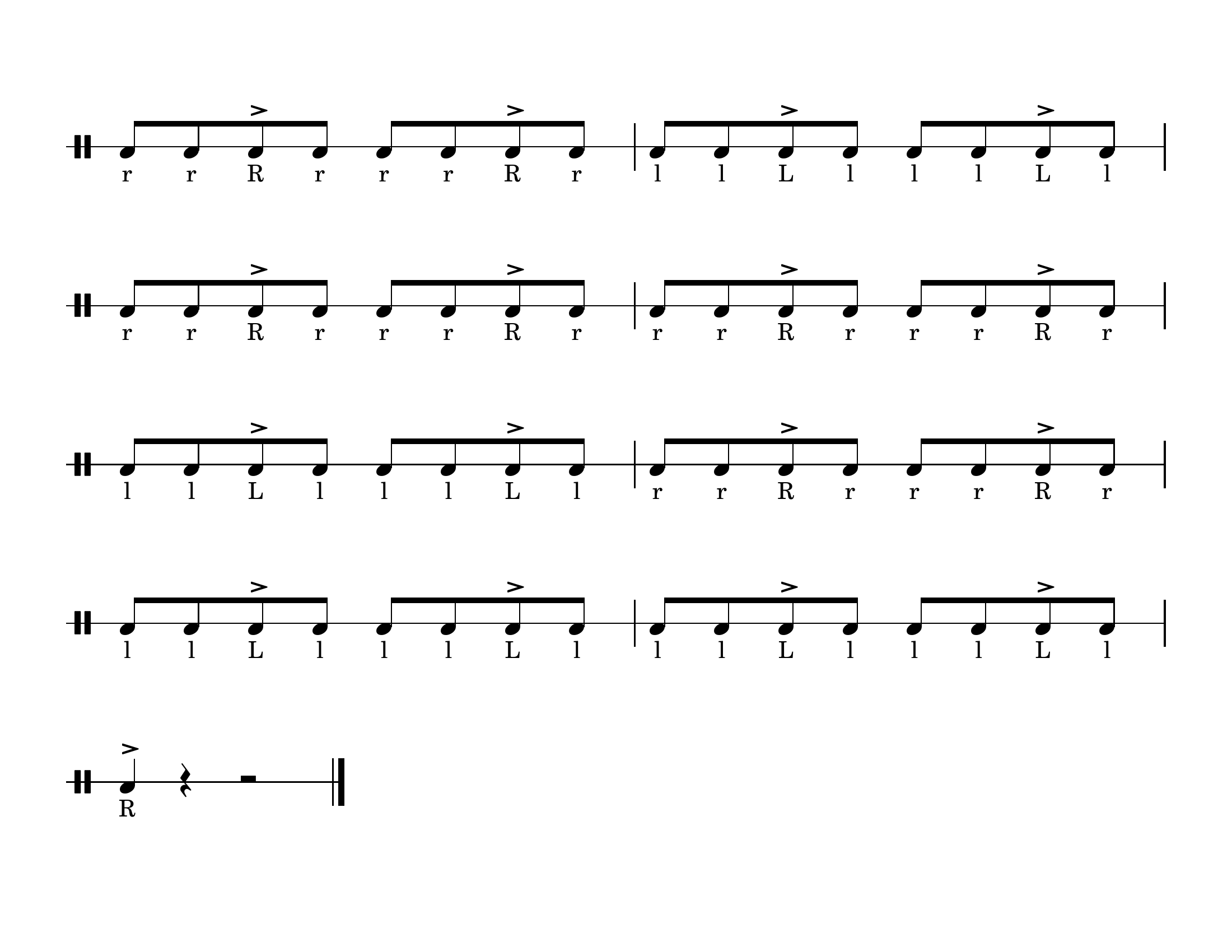
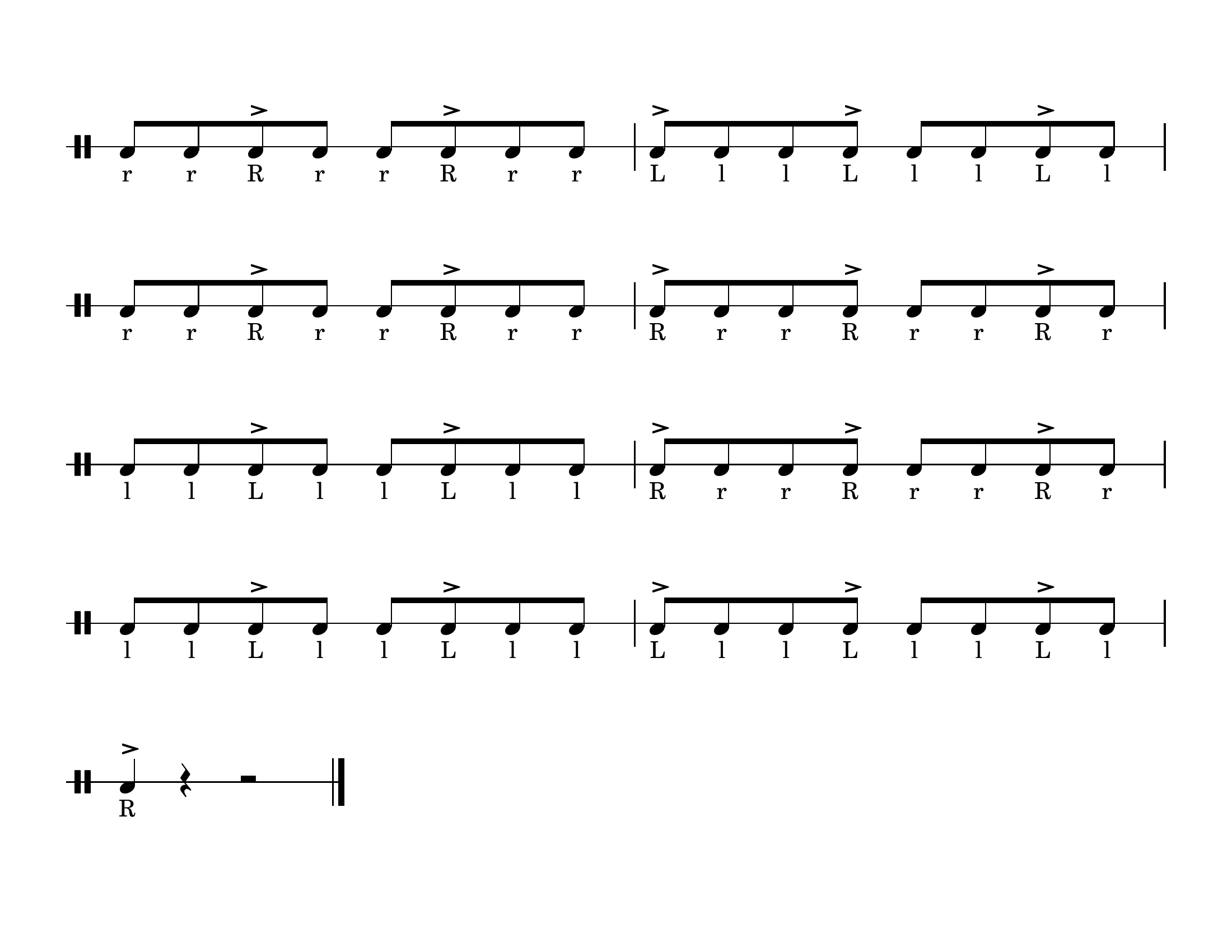
Because the underlying rhythm never changes, accent patterns become a clear study in what the hands are bringing out. The same eight-bar form supports a focused set of accent work:
Every beat
Beats 1 & 3
Beats 2 & 4
Syncopated accent pattern
Other Variations
Changing only one variable at a time makes it easier to hear exactly what that change produces. Useful directions include:
Shuffle bounce / triple strokes
Double stops (both hands playing together to emphasize uniformity)
A sixteenth-note version (includes turnarounds before hand exchanges)
Offset / displaced sticking (move the hand-transfer for a different mental feel)
Meter mix (because you can’t just play in 4/4 all the time!)
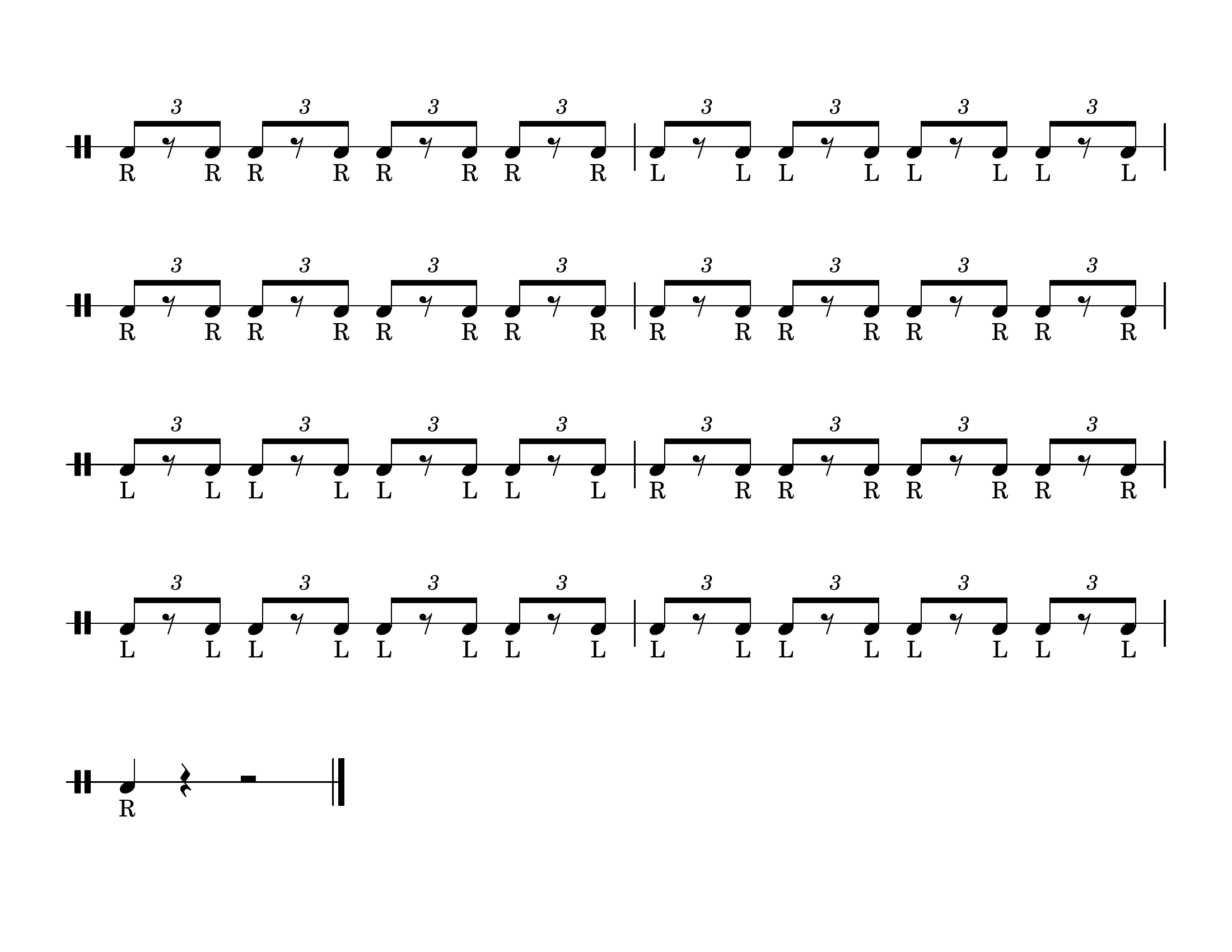
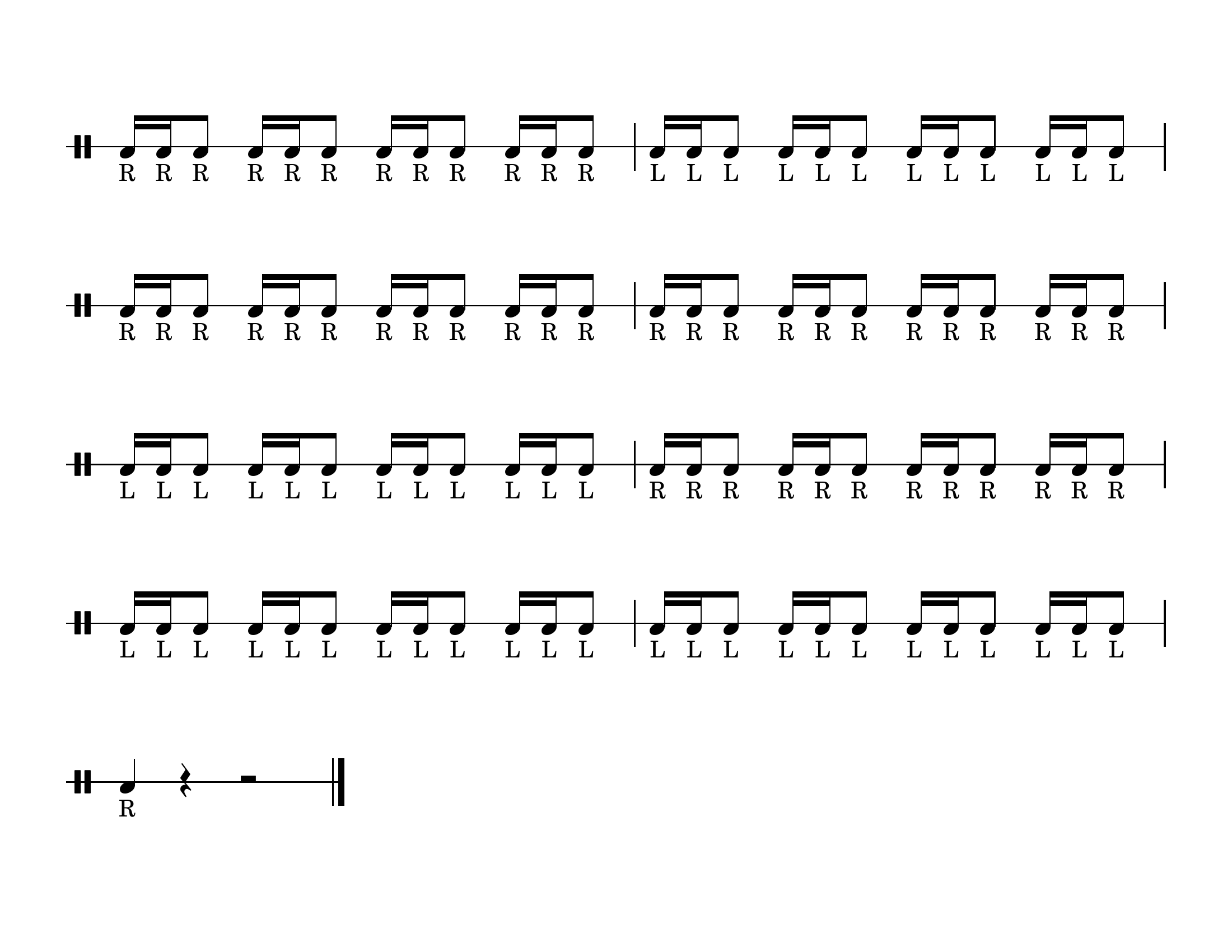
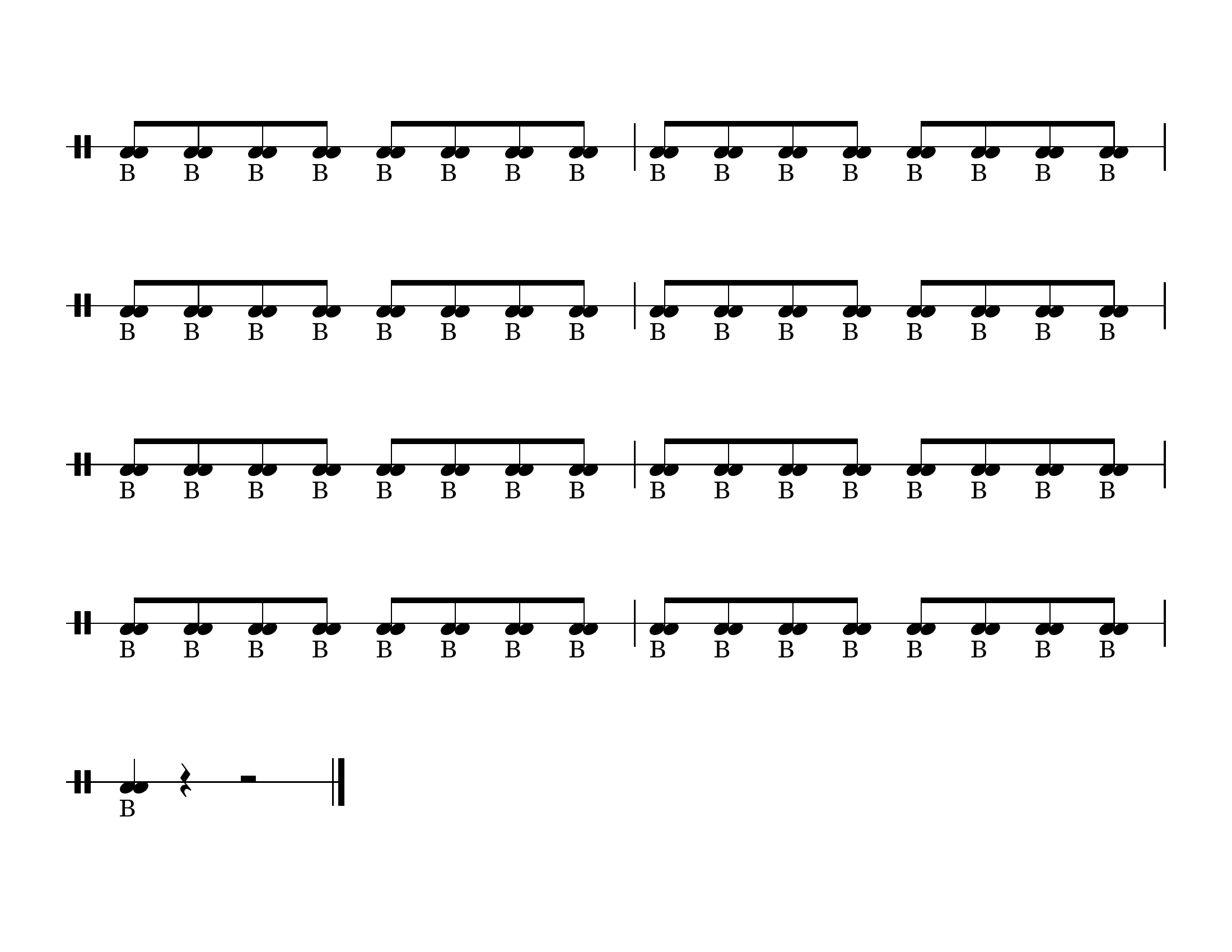
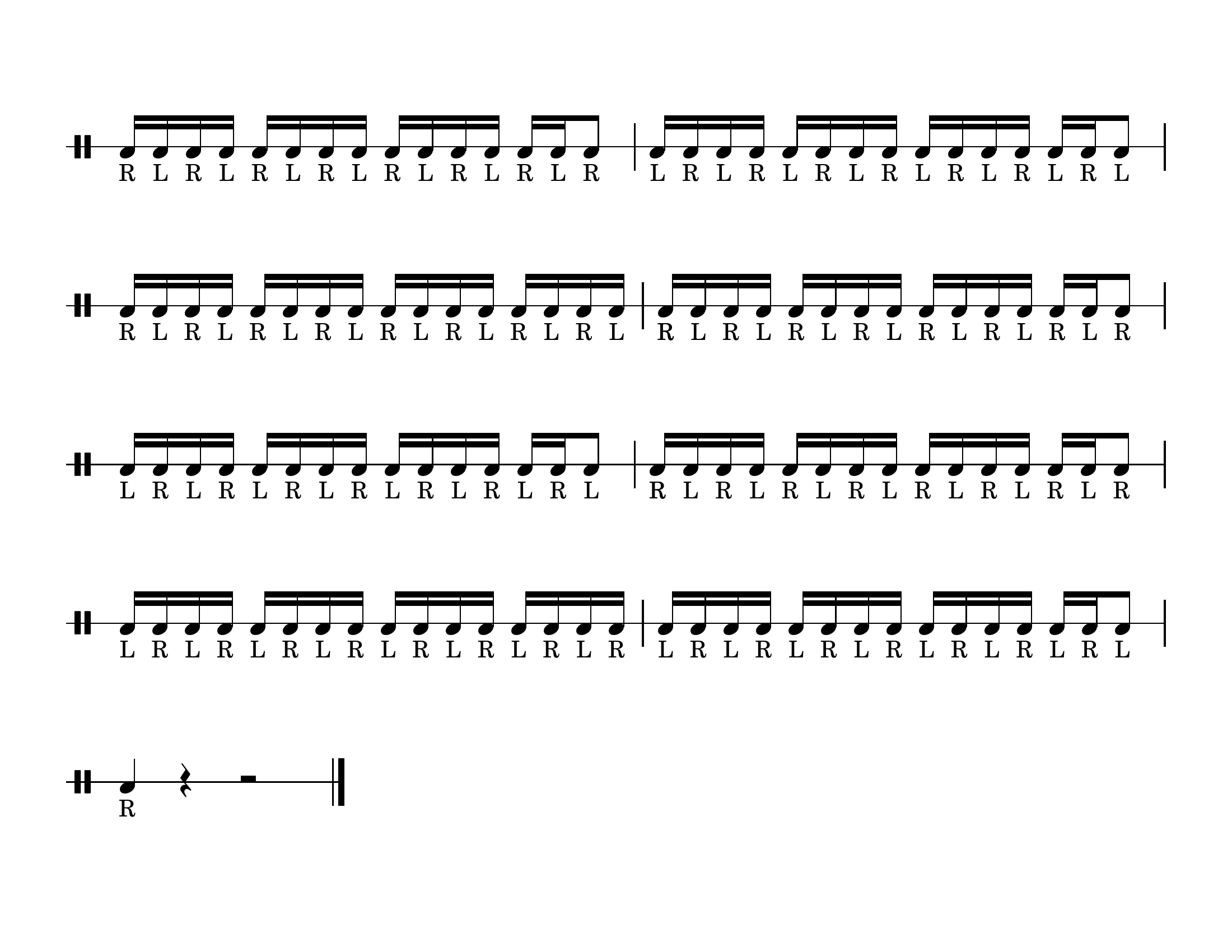
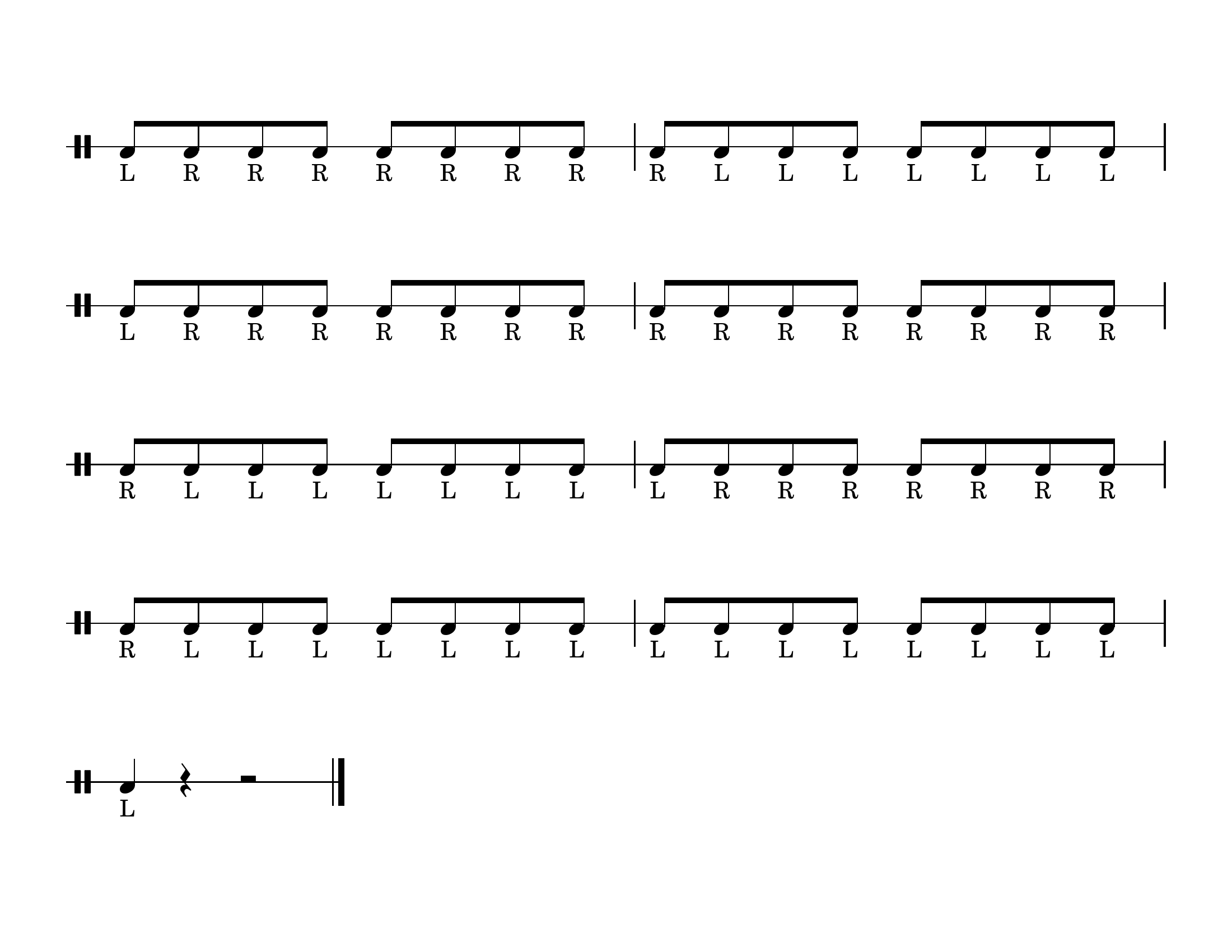
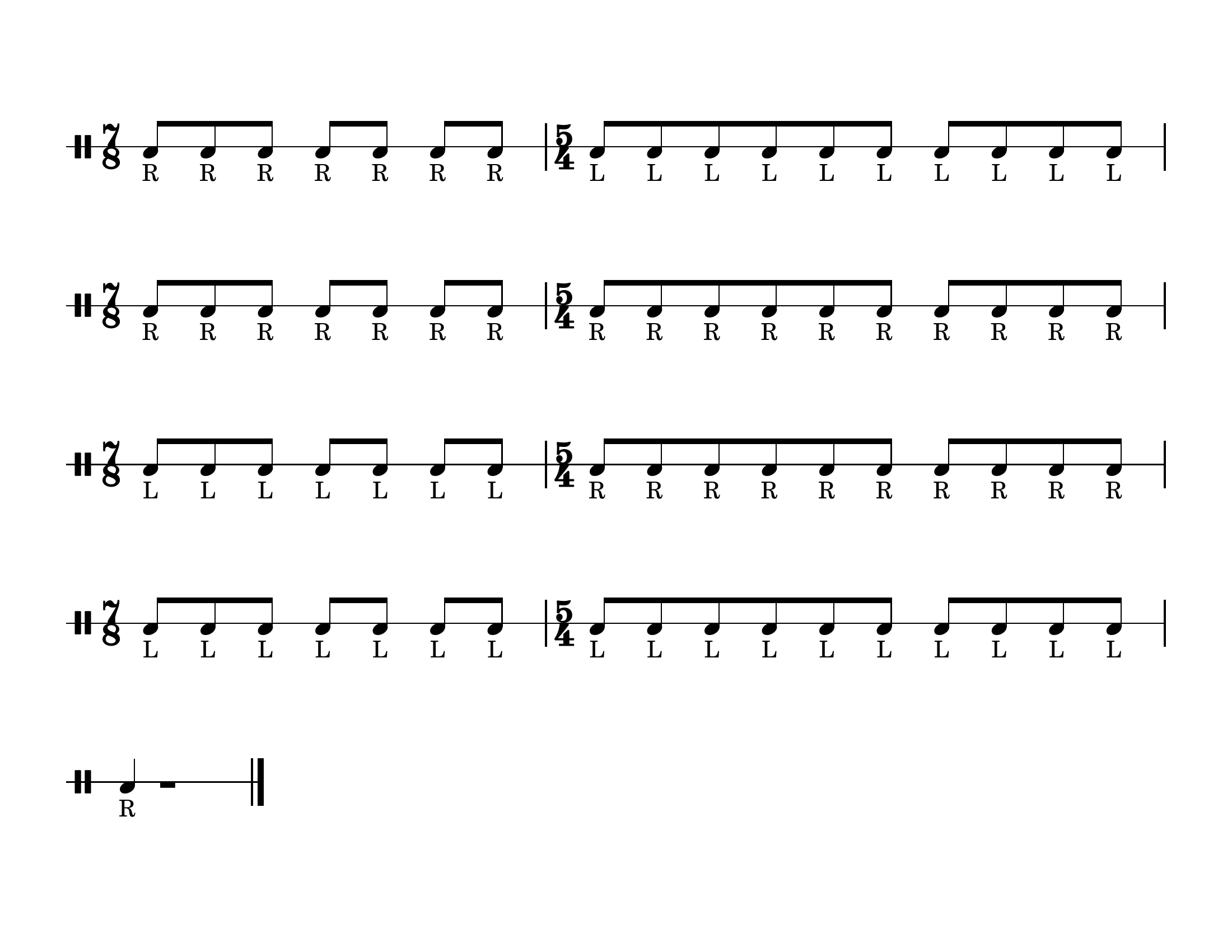
Each variation retains the original container while directing attention toward a different aspect of control. The form remains constant, skills can be inserted and combined easily, the content of the practice can continue to develop. The simplicity allows opportunity for creativity.
An exhaustive take on a simple exercise, but I really enjoy taking something simple and shining light on its depth and usefulness. Happy practicing!
PDF of 8-8-16 and variations available for download:
(Click image below)